Naděžda Uljeva
She has lived her entire life in the capital — worked as an accountant in one of Moscow’s enterprises and raised her only son Sergei, who became a professional soldier. When he left for the front in 2022, she sent him packages with homemade pirozhki, woolen socks, and long letters full of ordinary motherly advice — “Hold on, son, and come back.” Sergei was killed in the spring of 2023 during fighting in the east; the death notification arrived in April, and since then Nadezhda has worn a black headscarf and regularly visits his grave at Khovanskoye Cemetery, bringing fresh flowers and speaking to him out loud as if he could still hear her. Now she lives alone in a small two-room apartment in southern Moscow, occasionally meets with other mothers from the “soldiers’ mothers” groups, cooks borscht for the neighbors, and says that the greatest pain is the silence in the apartment where her son’s laughter once rang.
My Sergei Will Never Open the Door Again
February 11, 2026
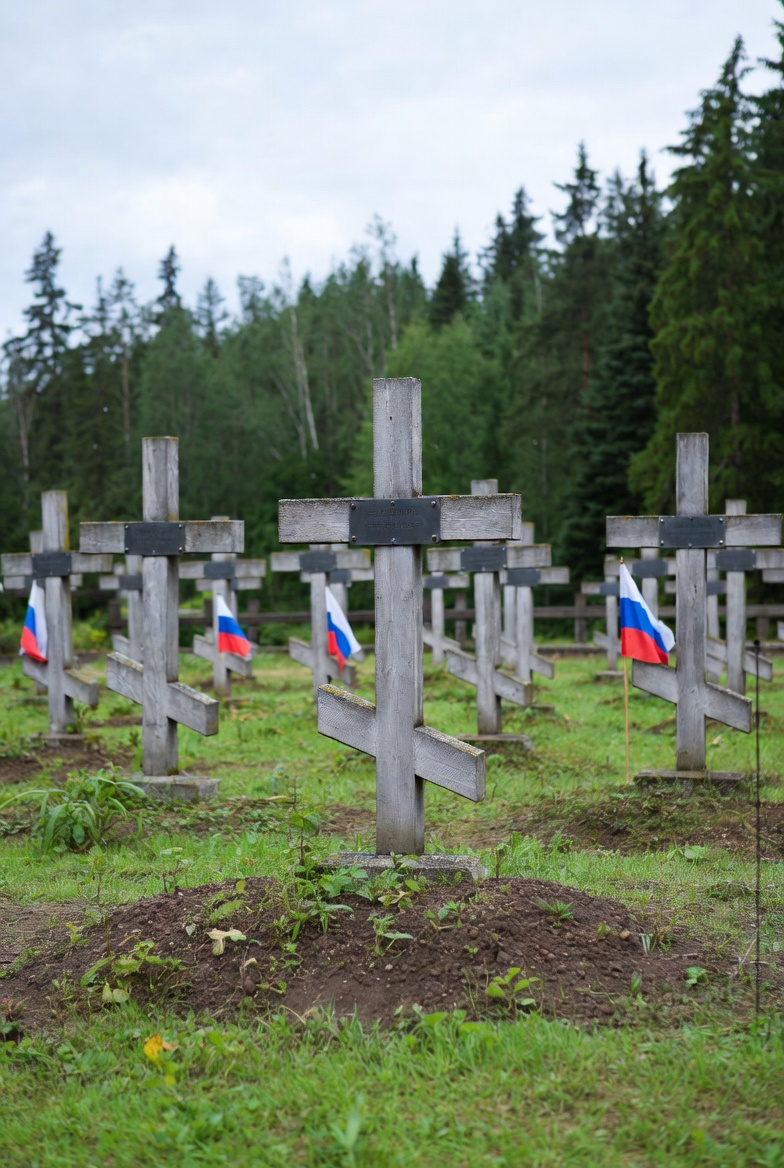
My name is Nadezhda Ulyeva. I am 61 years old and I have lived my entire life here in Moscow. I was an ordinary accountant — whole days in the office, papers, numbers, payrolls. The only thing that truly filled my life was my son Sergei. My only child. I raised him alone after my husband died in 2005. He was strong, a kind boy. He became a professional soldier — he said he wanted to protect the Motherland. I was afraid, but I looked at him proudly in his uniform.When he left for the “special military operation” in February 2022, I packed him parcels every month. Homemade meat pirozhki, which he loved the most, wool socks I knitted for him, chocolate, dried fruit. And most importantly — letters. Long, handwritten ones. I wrote to him about everyday things — how the chestnuts bloomed on Tverskoy Boulevard in Moscow, how the neighbor planted petunias on her balcony again, how I cooked borscht for him and kept it in the freezer for the day he would come back. Every letter ended the same way: “Just hold on, my son. And come back. Please, come back.”It came in April 2023. A short military notification. He fell in the spring during fighting in the east. No details. Just a date and a place. They brought the body in a zinc coffin. We buried him at Khovanskoye Cemetery. Since then I have worn a black headscarf. Every week I go there. I bring fresh flowers — tulips in spring, carnations in summer, chrysanthemums in autumn. I sit on the bench by his grave and talk to him out loud. I tell him about the weather, about how they talk about victory again on television, about how the neighbors asked if I had any news. As if he were listening. As if he were answering me.Now I live alone in a small two-room apartment in southern Moscow. I cook borscht — not for him anymore, but for the neighbors, so they have something warm. Sometimes I meet with other mothers — the ones who also lost their sons. We sit, we are silent, sometimes we cry, sometimes we just hold each other’s hands. None of us has words that could fix it.The greatest pain is not the grave, not the funeral, not even that notification. The greatest pain is the silence. The silence in the apartment where his laughter once rang, his footsteps as he slammed the door, his voice calling “Mom, I’m home!” Now the silence is so loud I hear it in my ears all the time. And in that silence I keep asking the same question over and over: Why? Why did my only son have to die? Why did thousands of other boys have to die? What did we gain from this? What kind of “victory” is worth it when sons don’t come home?I don’t want victory anymore. I just want to hear his voice. I want him to open the door and say: “Mom, I’m back.”But he won’t come back. And I will listen to this silence until the end of my days.Nadezhda Ulyeva Moscow, February 2026